



NADH Dehydrogenase
NADH Dehydrogenase
NADH Dehydrogenase is a class of enzymes that play a key role in the process of cellular respiration and belongs to the oxidoreductase family. NADH Dehydrogenase can catalyze the oxidation of NADH and transfer electrons to other molecules. There are two main subtypes of this enzyme, namely proton transporting NADH-quinone oxidoreductase (such as complex I in mitochondria and NDH-1 in bacteria) and non-proton transporting NADH-quinone oxidoreductase (such as NDI, NDE in mitochondria and NDH-2 in bacteria).
NADH dehydrogenase is in an upstream position in the electron transport chain, accepts electrons provided by NADH, and interacts with a variety of proteins. For example, in mammalian cells, AIFM1, as a type of NADH dehydrogenase, interacts with MIA40 and participates in the assembly and maintenance of mitochondrial respiratory chain complexes. Its main function is to participate in mitochondrial respiration. During the electron transfer process, it generates energy for cells by oxidizing NADH. It also plays an important role in regulating cell apoptosis. For example, some NADH dehydrogenases can produce pro-apoptotic fragments and trigger cell death. Mitochondrial NADH dehydrogenase deficiency is associated with a variety of mitochondrial diseases, such as mitochondrial encephalomyopathy, Parkinson's disease, and Huntington's disease. In cystic fibrosis, the activity and properties of NADH Dehydrogenase are altered, affecting the course of the disease. Type I NADH Dehydrogenase (NDH-1) is involved in inhibiting host macrophage apoptosis in Mycobacterium tuberculosis infection, affecting the virulence of the pathogen and the course of infection[1][2][3][4][5][6].
References:
- [1]. Heikal A, et al. Activation of type II NADH dehydrogenase by quinolinequinones mediates antitubercular cell death. J Antimicrob Chemother. 2016 Oct;71(10):2840-7. [Content Brief]
- [2]. Herrmann JM, et al. Apoptosis inducing factor and mitochondrial NADH dehydrogenases: redox-controlled gear boxes to switch between mitochondrial biogenesis and cell death. Biol Chem. 2020 Aug 25;402(3):289-297. [Content Brief]
- [3]. Weiss H, et al. The respiratory-chain NADH dehydrogenase (complex I) of mitochondria. Eur J Biochem. 1991 May 8;197(3):563-76. [Content Brief]
- [4]. Shapiro B L, et al. Mitrochondrial NADH dehydrogenase in cystic fibrosis. Proceedings of the National Academy of Sciences, 1979, 76(6): 2979-2983.
- [5]. Yagi T, et al. NADH dehydrogenases: from basic science to biomedicine. J Bioenerg Biomembr. 2001 Jun;33(3):233-42. [Content Brief]
- [6]. Miller JL, et al. The type I NADH dehydrogenase of Mycobacterium tuberculosis counters phagosomal NOX2 activity to inhibit TNF-alpha-mediated host cell apoptosis. PLoS Pathog. 2010 Apr 22;6(4):e1000864. [Content Brief]
All Product Categories
-
NADH Dehydrogenase Related Products (7)
Related Products (7)

-
LCC-12 formate
 0 ImagesCat. No.: HY-W722277APurity: 99.9%LCC-12 formate is a mitochondria-targeted Copper2+ -selective binder and metabolic/epigenetic reprogramming agent. LCC-12 formate inhibits NAD (H) redox cycling and reduces the NAD (H) pool. LCC-12 formate downregulates the expression of inflammatory genes and improves outcomes in mouse models of bacterial sepsis, endotoxemia, and SARS-CoV-2 infection. LCC-12 formate can be used in research related to acute inflammation, endotoxemia, sepsis, and SARS-CoV-2 infection.
-
Glutamate Dehydrogenase, Bovine Liver
 0 ImagesCat. No.: HY-E70003AGlutamate Dehydrogenase, Bovine Liver (EC 1.4.1.4) catalyzes the reversible oxidative deamination of glutamate to alpha-ketoglutarate and ammonia.
-
Pleurocidin
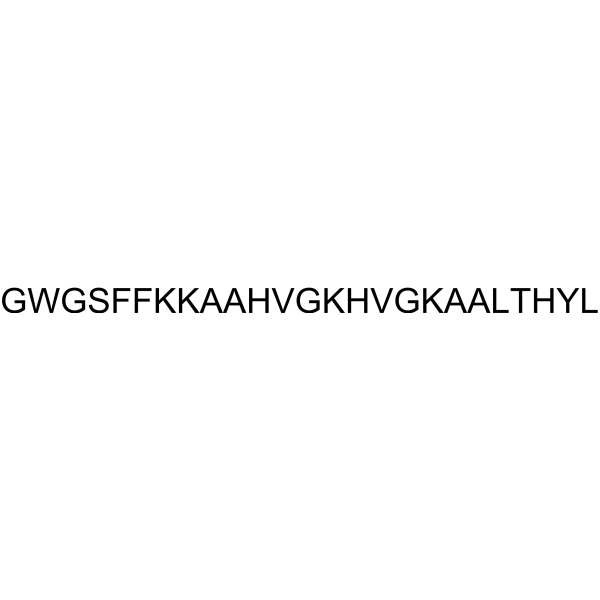 0 ImagesPleurocidin is an Antimicrobial peptide. Pleurocidin is derived from the skin mucosa or intestinal secretions of Pseudopleuronectes americanus. Pleurocidin inhibits the expression of key proteins in the MAPK and NF-κB inflammatory signaling pathways. Pleurocidin alters serum inflammatory and immune cytokine levels, regulates the down-regulation of tight junction proteins, and modulates the intestinal flora. Pleurocidin exerts antibacterial activity by inducing bacterial membrane damage, hydroxyl radical formation, and NADH depletion, and also produces a synergistic effect with Antibiotics. Pleurocidin alleviates DSS-induced ulcerative colitis. Pleurocidin can be used for research on ulcerative colitis, bacterial infections, and bacterial biofilm-related infections.
-
CP61
 0 ImagesCat. No.: HY-P10812CAS No.: 1631984-43-4CP61 is a CtBP1 and CtBP2 inhibitor that binds to dimeric CtBP1 and allosterically inhibits NADH binding, disrupting the NADH-dependent dimerization of CtBP1 and CtBP2, inducing aberrant mitosis and micronucleus formation, thereby inhibiting cell proliferation and colony formation. CP61 can be used in breast cancer research.
-
3-(2',5'-Disulfophenylimino)-3H-phenothiazine sodium
 0 ImagesCat. No.: HY-W906543ACAS No.: 1419158-69-23-(2',5'-Disulfophenylimino)-3H-phenothiazine sodium (Compound M2) is a lectron-transfer mediator. 3-(2',5'-Disulfophenylimino)-3H-phenothiazine sodium offers good enzyme reactivity and interference-free electrocatalysis of NADH. 3-(2',5'-Disulfophenylimino)-3H-phenothiazine (sodium) can be used for the research of type 2 diabetes.

-
2'-Deoxy-NAD+ sodium
 0 ImagesCat. No.: HY-137673ACAS No.: 1514900-83-42'-Deoxy-NAD+ sodium is a noncompetitive NAD+ inhibitor with a Ki of 32 μM. 2'-Deoxy-NAD+ sodium can be utilized as a substrate to study the ADP-ribosyl transfer reaction.



